PROJECT / Reusing PA12 Powder From Multi Jet Fusion 3D Printing
Reusing PA12 Powder From Multi Jet Fusion 3D Printing
Testing whether unused and process-exposed PA12 powder from Multi Jet Fusion can be upcycled into injection moulding — including 1,000-hour thermal ageing tests.
Industrial 3D printing is often presented as a flexible and efficient manufacturing method, but every production process has its own material challenges. In this project, I focused on one of the practical questions behind Multi Jet Fusion technology: how can unused or previously exposed PA12 powder be upcycled?
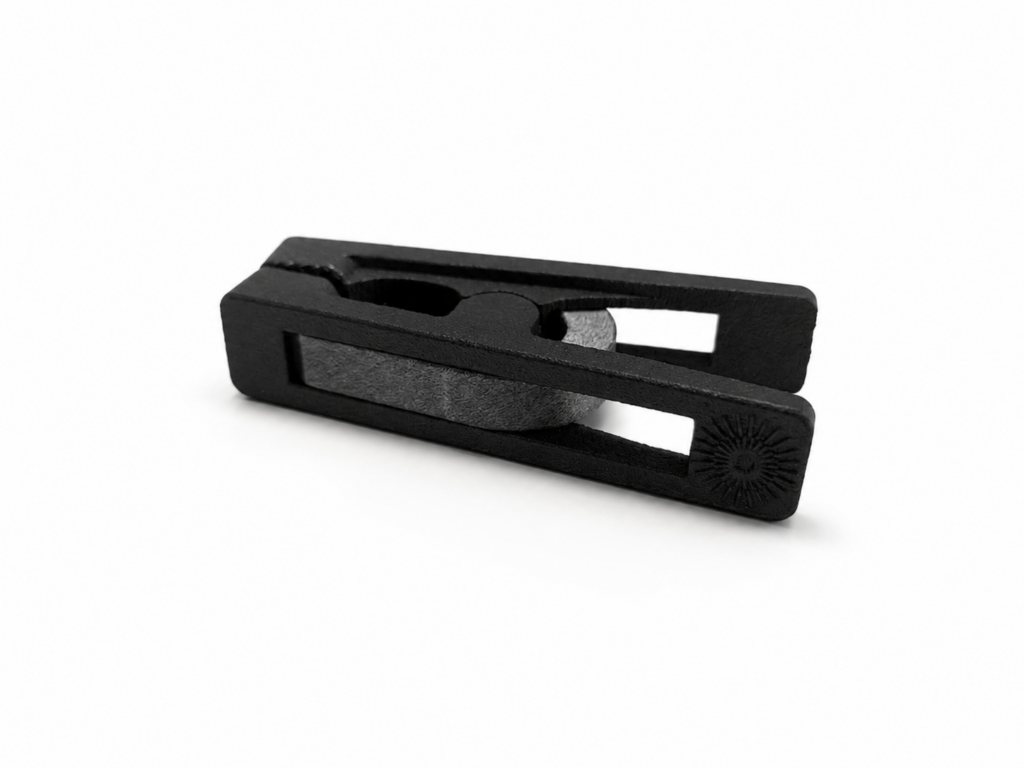 3D printed clothes peg with Multi Jet Fusion technology (PA12)
Multi Jet Fusion is a powder-based 3D printing process used for producing strong, accurate polymer parts, especially from PA12. Its closest relative in additive manufacturing is Selective Laser Sintering, since both technologies use polymer powder as the base material and are suitable for functional prototypes, small series, technical components, and complex geometries that would be difficult or expensive to manufacture with traditional methods. However, during MJF printing, part of the powder is exposed to heat and process conditions without becoming part of the final printed component. This creates a material stream that can no longer be reused directly in the MJF process, but still deserves attention.
I explored whether this PA12 powder from the MJF process could be reused outside of 3D printing, specifically in injection moulding. The goal was to better understand how material from additive manufacturing behaves when it is processed again through a conventional plastics technology.
The project included several material variants: unused PA12 powder, PA12 technological waste from the MJF process, powder collected after part cleaning, and a mixture of new and reused material. These materials were processed into test samples and evaluated through mechanical and thermal testing. I also used a climatic chamber to simulate long-term thermal ageing by exposing the samples to elevated temperatures for 200, 500, and 1,000 hours. This made it possible to compare the behaviour of clean and reused PA12 not only immediately after processing, but also after accelerated ageing.
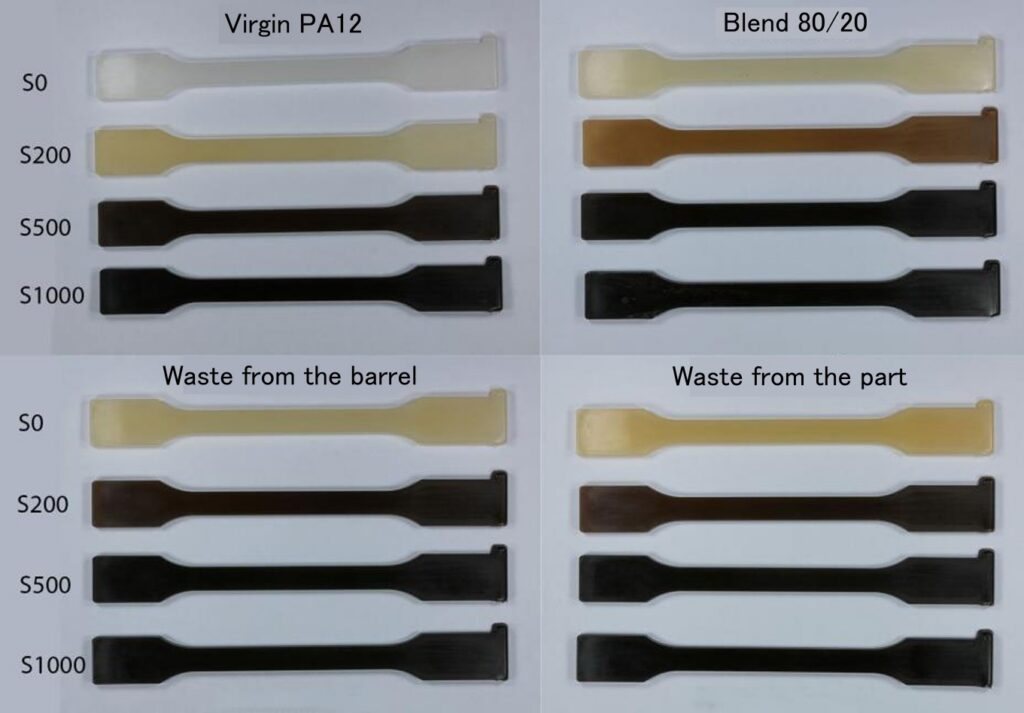
The results showed that reused PA12 powder from Multi Jet Fusion can retain useful mechanical properties under the tested conditions. Tensile, bending, and impact performance remained comparable to parts made from unused PA12 powder. The most noticeable difference was visual: material exposed during the MJF process showed colour changes caused by oxidation, which makes it more suitable for technical, internal, or pigmented parts rather than clean white visible components.
This project was valuable because it connected additive manufacturing with real production thinking. 3D printing is not only about making complex parts; it is also about understanding materials, repeatability, process limits, and long-term usability. For professional 3D printing services, this kind of material and technology knowledge matters. It helps with choosing the right manufacturing method, estimating part performance, reducing waste, and advising customers when a printed or post-processed part is suitable for a specific application.
For me, the key takeaway is that Multi Jet Fusion has strong potential not only as a manufacturing method, but also as part of a more efficient material cycle.